Mental Health & Wellbeing in the Workplace

We believe that placing importance on workplace mental health and wellbeing has never been more vital.

RightMind Therapy & Training can offer a variety of ways to support you and your employees.

We have training courses on a wide range of workplace wellbeing topics, including these popular workshops:

  • Introduction to Mental Health & Wellbeing
  • Managing Stress
  • Understanding Anxiety
  • How to support your team, as well as yourself

We work in consultation with small, mid-sized and large organisations to create a bespoke package which often includes employee workshops, managers training plus one-to-one support sessions and mental health consultancy.

The RightMind team have a wealth of expertise, qualifications and many years experience in providing mental health support and training and we can help organisations with as little as a stand alone, informative workshop, through to a wider training programme and employee assistance services.

In the first instance, please get in touch with our Head of Practice, Tanya Taylor-Wright contact@rightmind.co.uk
Pride 2023 – LGBTQIA+ and Mental Health

About LGBTQIA+ and Mental Health

Identifying as LGBTQIA+ means that we may be lesbian, gay, bisexual, transgender, queer, questioning, intersex or asexual. We can also define our sexuality and gender in other ways. You can find more information at www.stonewall.org.uk

Any of us can have periods in our lives where we experience mental health issues. Identifying as LGBTQIA+ does not cause you to have mental health issues, but wider factors can sometimes mean that you may experience issues such as low self-esteem; depression; anxiety; eating problems; drug and alcohol misuse; self-harm and other mental health problems.

The wider factors that impact mental health could be caused by experiences relating to homophobia, biphobia or transphobia; discrimination; stigma; if coming out was difficult; feeling socially isolated, excluded or rejected (this list is not exhaustive).

The good news is that there are many positives to embracing your LGBTQIA+ identity including huge benefits to your wellbeing. You may notice increasing confidence; better relationships; a sense of belonging to part of a community; opportunity and freedom to express and accept yourself; greater resilience.

Mental and Emotional Health Support

RightMind are here for anyone that is experienced difficulties with mental and emotional health and we understand that there can sometimes be challenges in both finding the right support and taking steps to begin therapy.

Remember that different things work for different people – there is no ‘one size fits all’ approach to the right support, or what might help with your specific needs for improving your wellbeing.

If you are struggling, here are some suggestions that might help you to begin improving how you feel:

  • Talk about how you feel to a trusted friend or family member. This can feel really difficult but many people feel better after talking through what they are struggling with.
  • Self-care can significantly help us improve our mental and emotional health and wellbeing. Different things work for different people, so you may need to experiment a bit before you find the right self care rituals for you. Internalised discrimination (the messages we give ourselves after we have experienced any kind of discrimination including homophobia, biphobia or transphobia) can significantly impact things like self-esteem, confidence and social anxiety. Prioritising yourself and developing a regular self-care routine can really help to improve all of the above. You could try volunteering, joining a group of likeminded people, look at your sleep patterns and diet and see if there is room for improvement, think about what physical activity you enjoy and if you are making time to do this regularly, or perhaps try new things. There are many more ways to build in a self-care routine that works for you.
  • Try and make community connections. This might be others identifying as LGBTQIA+ or others who are struggling with similar mental and emotional health issues. Peer support can be found through online communities. Some employers and universities offer mentoring schemes. Here are some links that might help: www.consortium.lgbt www.stonewall.org.uk www.fflag.org.uk
  • Try counselling or psychotherapy. You can do this privately, by a GP referral or by contacting a charity who may be able to offer support. Contact us for more details of private support by emailing contact@rightmind.co.uk
If you require immediate support, please contact Samaritans by calling 116 123 or visits www.Samaritans.org

Anxiety by Kate Satrettin

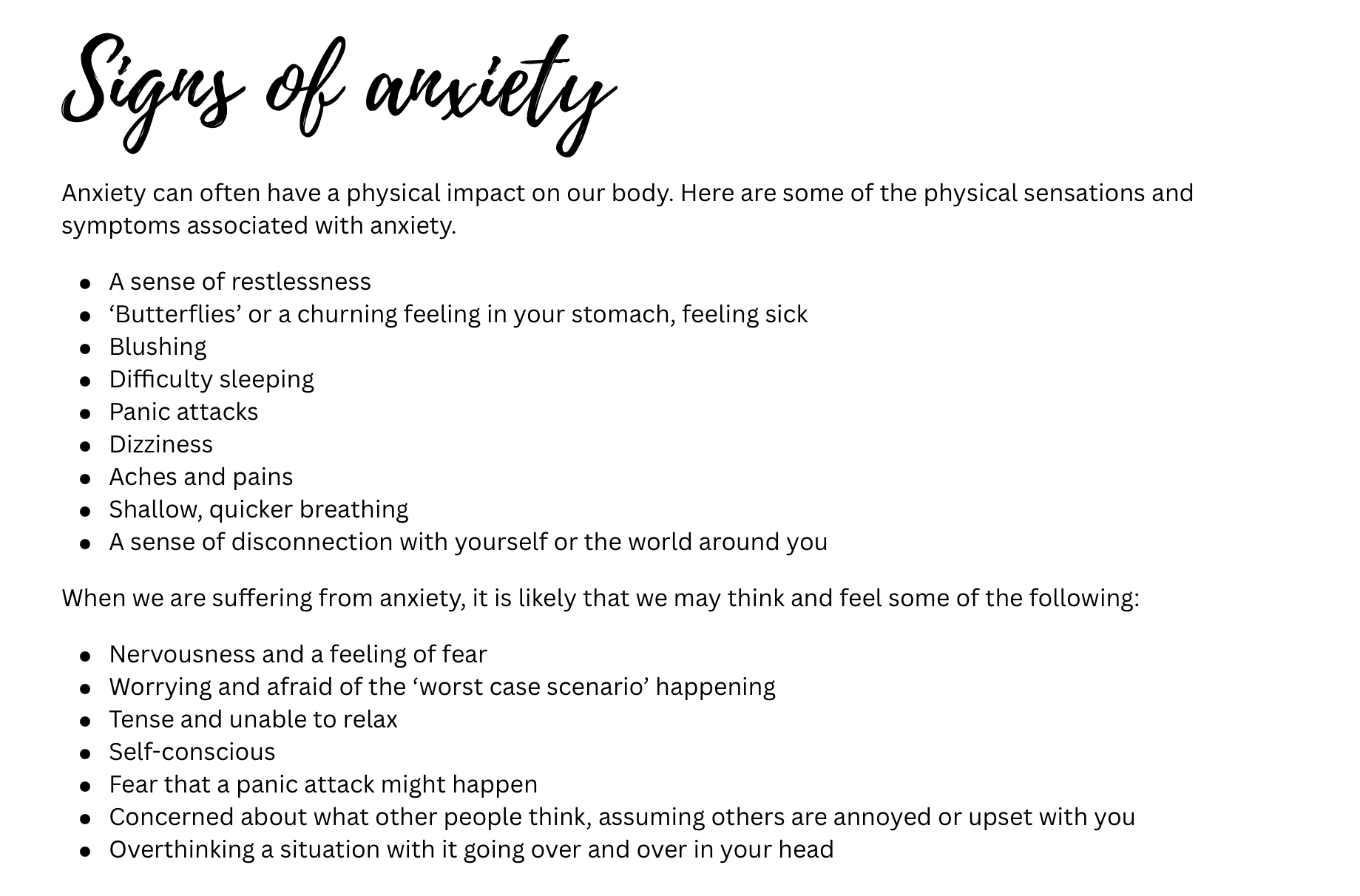
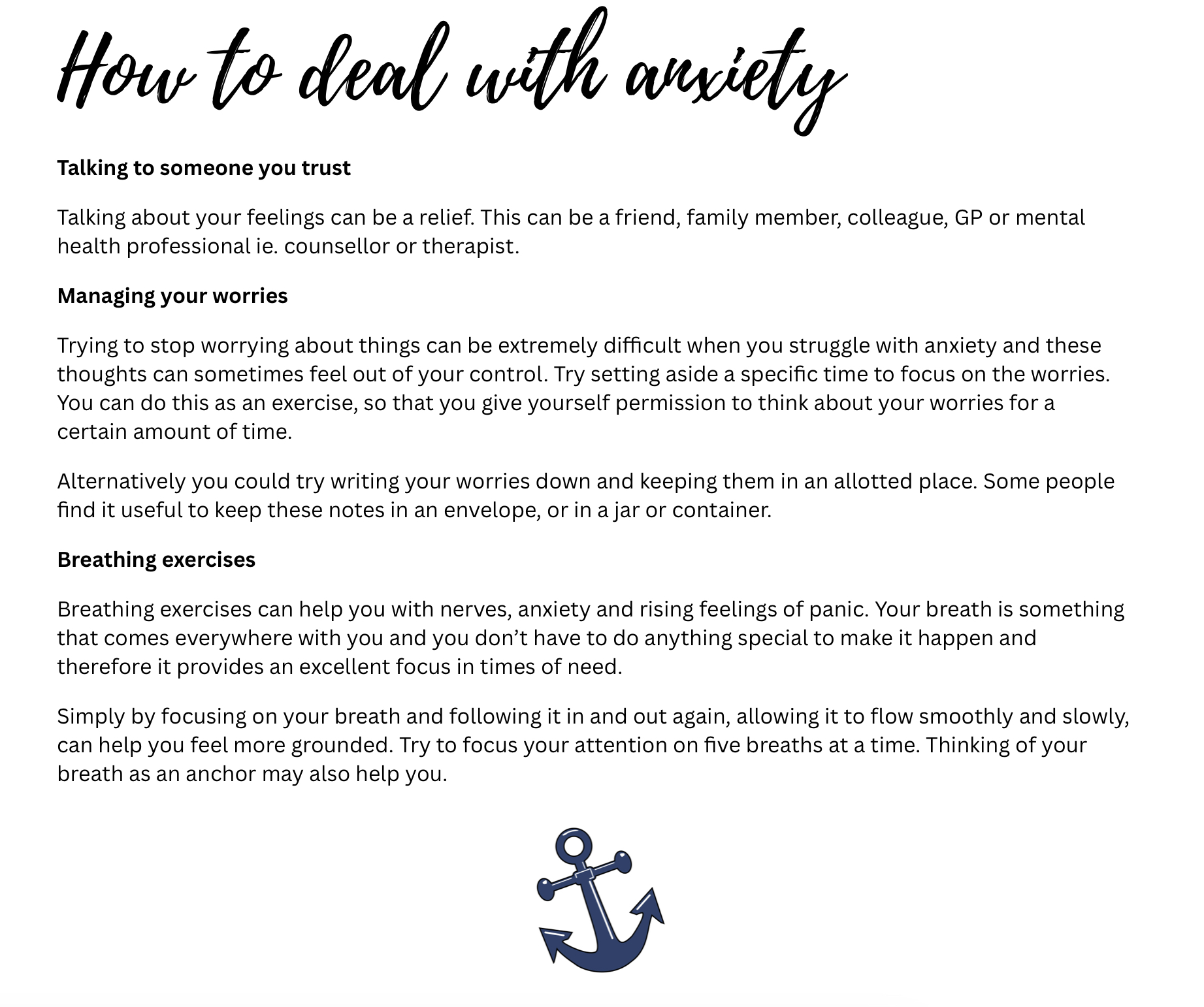
Anxiety can be described as your mind playing a scary scenario on repeat, and you may find it difficult to hit the pause button. It can be really hard to shake the constant worry. You might have physical symptoms like feeling your heart racing, your legs trembling or your palms sweating. You may feel dizzy, have difficulty speaking or find it hard to sleep. These symptoms are caused by the hormones released by the fight, flight, freeze and fawn responses.

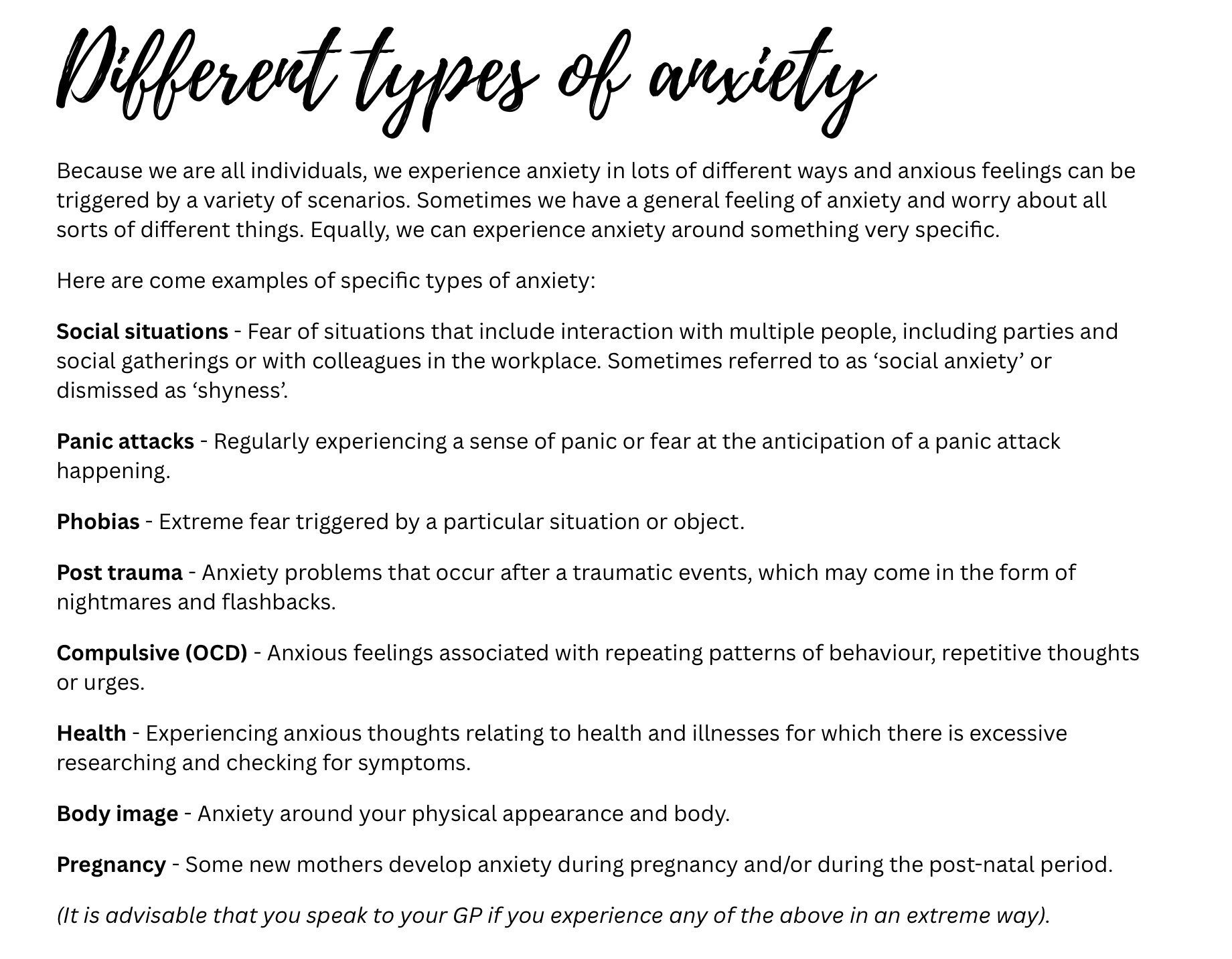
It’s important to remember that anxiety is a normal human emotion, and everyone experiences it from time to time. However, overly anxious feelings can interfere with your life, become out of proportion and be very distressing. If anxiety becomes unbearable, it may be time to seek help and support.

Signs You May Find Counselling Helpful

• Constantly worrying

• Feeling on edge or tense most of the time

• Avoiding certain situations or activities because of anxiety

• Experiencing panic attacks

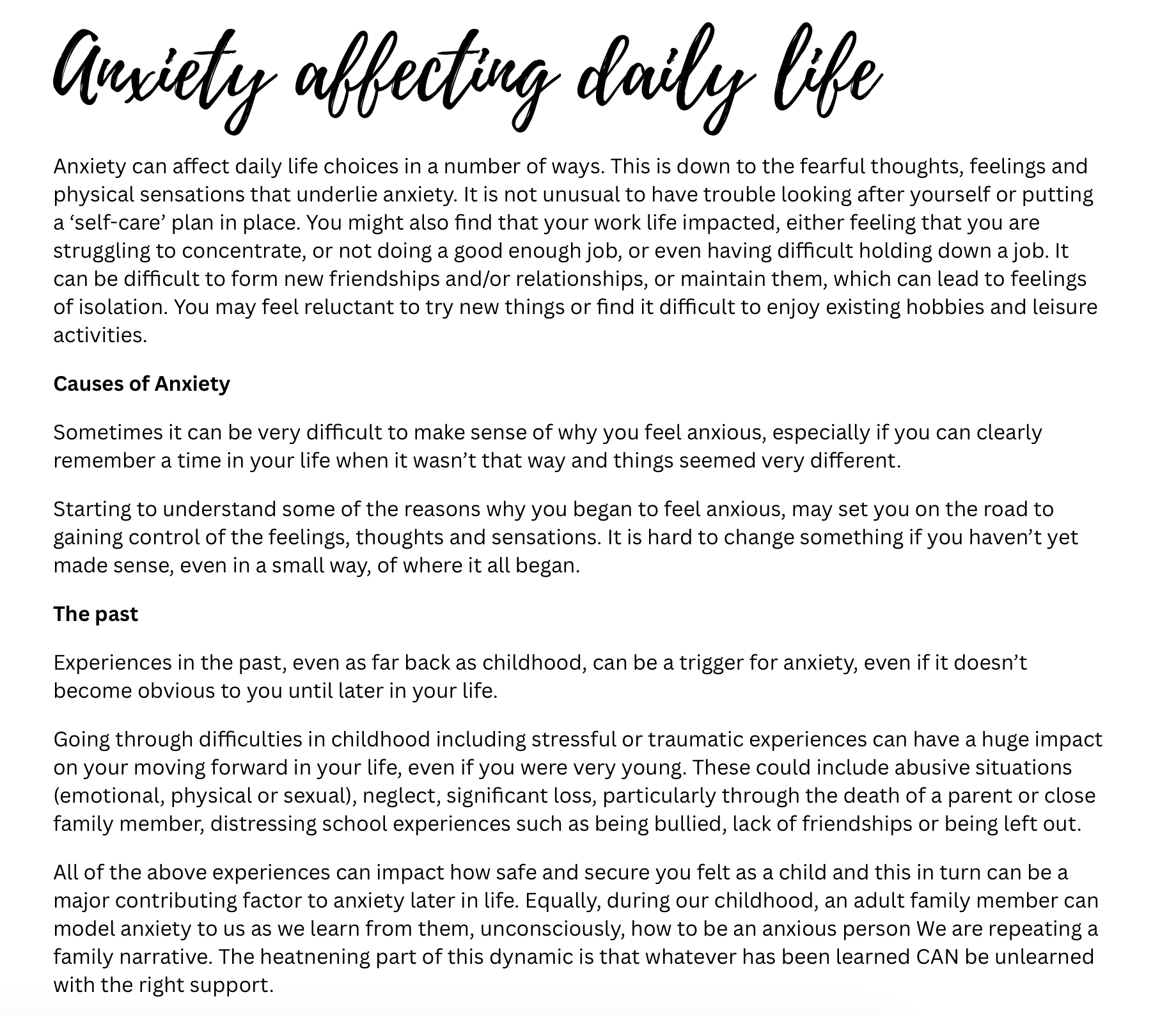
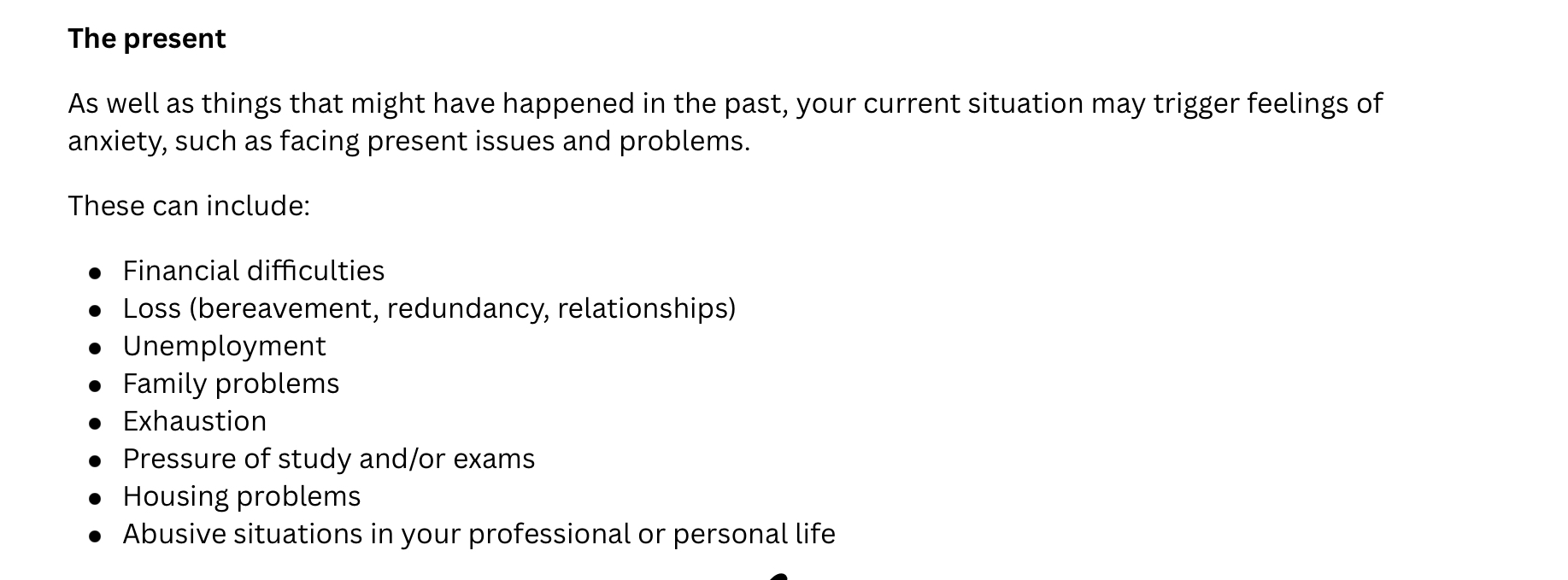
At RightMind Therapy & Training, Kate can help you understand your anxiety and perhaps where it has stemmed from. What is causing your fears? Are there any underlying issues, anything that triggers these feelings of anxiety? Have you developed unhelpful thinking patterns? Kate can also help you develop some skills to manage your anxiety and to hopefully lessen its impact e.g., by learning some grounding and breathing techniques. Developing a tool box of strategies and skills can be very empowering and can encourage change.  

Kate Satrettin is an associate therapist with RightMindTherapy & Training, Sevenoaks. Kate works with adults. She uses the psychodynamic approach in her counselling work and has worked with a wide range of client issues, including anxiety and depression. Kate is also a Post-Cult Counsellor and works with people who have had a cultic experience, religious or spiritual trauma and abusive relationships. 

To arrange an appointment with Kate please email contact@rightmind.co.uk

Counselling Support in Canterbury

RightMind are delighted to be able to offer face to face counselling in Canterbury, Kent with qualified integrative counsellor, Charlie Kidd. Registered member of the British Association of Counselling and Psychotherapy.

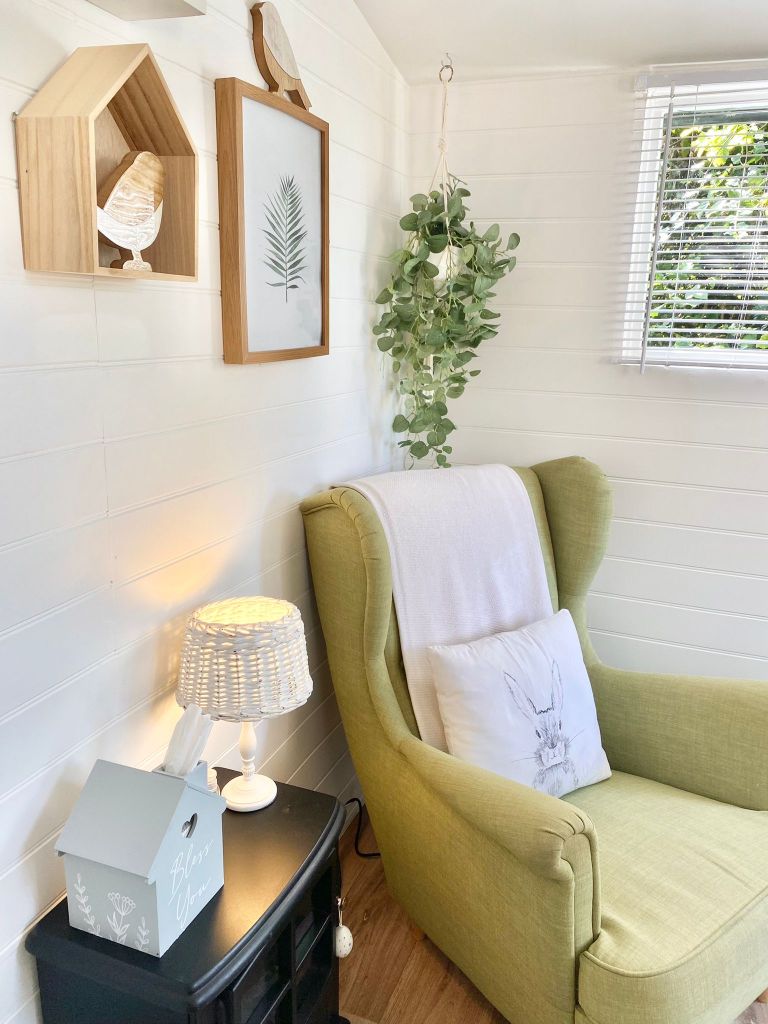
Sessions are held in a peaceful, quiet consulting room situated in the Nackington area of Canterbury.

Charlie’s consulting room is completely private and has a beautiful outlook, which is an ideal setting in which to feel safe when embarking on the therapy process.

Charlie Kidd (MBACP) Associate Integrative Counsellor

Charlie is a qualified integrative counsellor who has worked with individual clients in placement at the Bowden Centre in Herne Bay. Her experience includes: childhood trauma and how that presents in adulthood, anxiety, low mood and low self-esteem, confusion, depression, family issues, domestic abuse, bereavement and loss, relationship difficulties, lack of confidence, loneliness and isolation.

Prior to qualifying as a counsellor, Charlie spent 20 years working as a support worker, primarily with young people and their families.. This covered a wide range of social, emotional and behavioural issues.

Sessions are weekly and each appointment lasts for 50 minutes.

Fee: £60 per session payable online or by bank transfer.

To arrange an initial consultation with Charlie, please contact RightMind Therapy & Training by email: contact@rightmind.co.uk where you can also confidentially provide brief reasons for seeking support at this time.

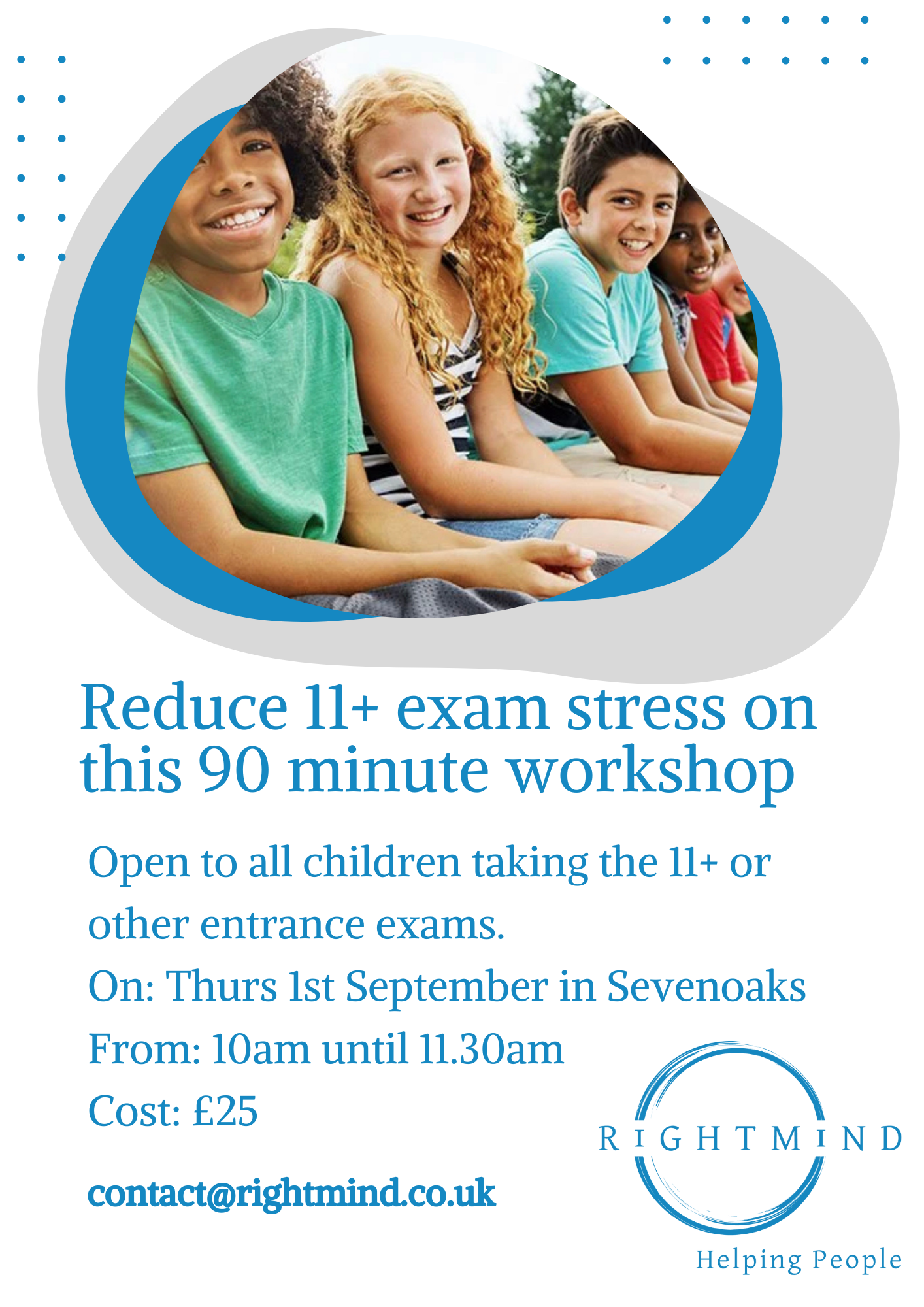
Reduce 11+ Exam Stress

Open to all children taking 11+ or other entrance exams.

Is your child finding exam stress difficult to manage? Mindfulness and relaxation techniques can be incredibly useful in managing exam pressure and helping a child to perform to the best of their ability.

In this session we can teach your child techniques to use at every stage including in the exam itself to help them feel more confident and in control.  The class involves stretching, mindfulness, breathing techniques and exam visualisations to help your child understand how their brain may be working and find ways to thrive.

On: Thursday 1st September in Sevenoaks from 10am until 11.30am. £25 per child.

Led by Danusia Atkinson

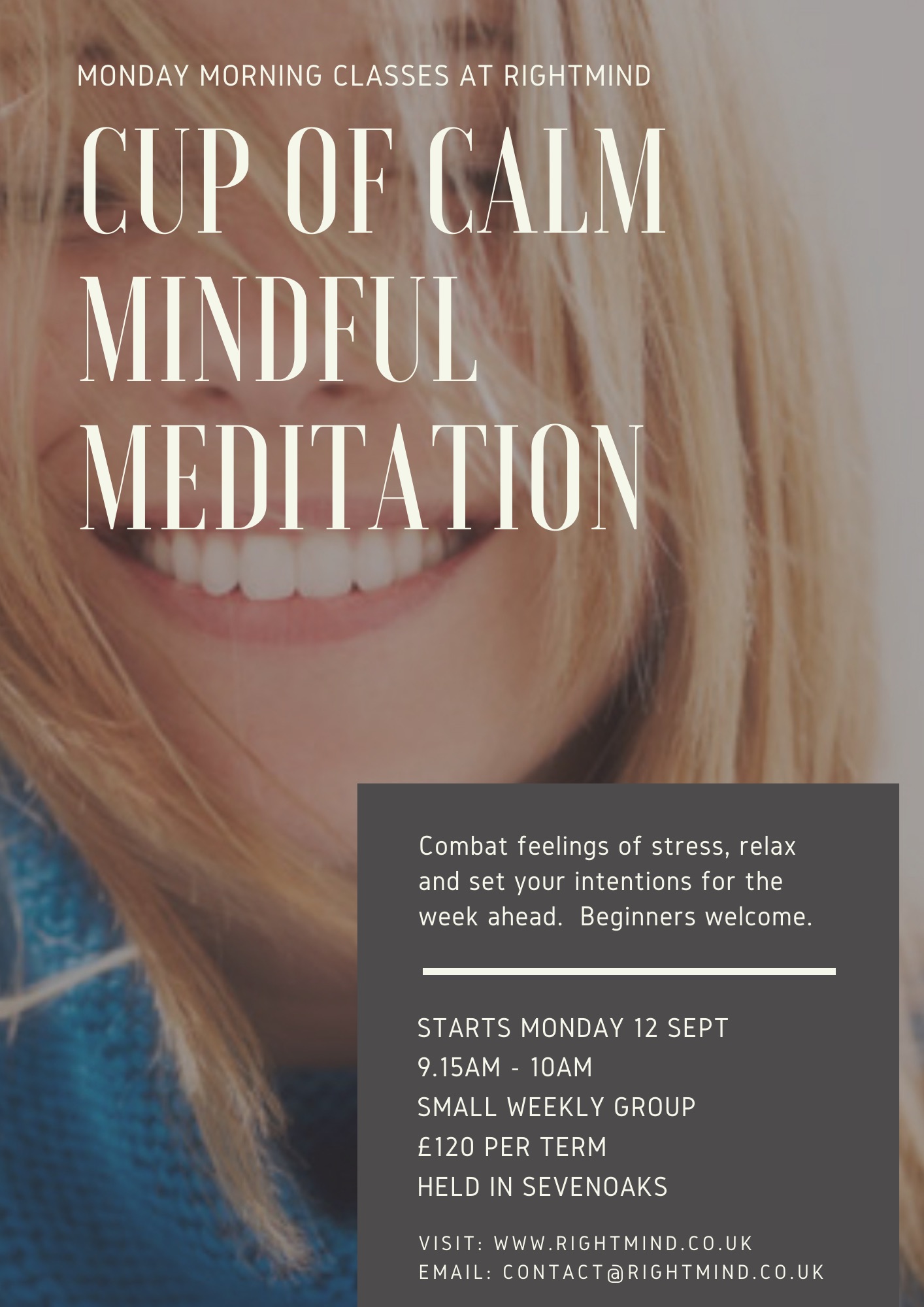
Cup of Calm returns in September 2022

Cup of Calm – Monday morning meditation classes. New term starts Monday 12th September 9.15am – 10am and runs for 6 consecutive weeks in Sevenoaks.

Complete beginners are welcome to this practical meditation session. An opportunity to make mindful meditation part of your weekly routine (we know how hard it is to remember to do this at home when life is busy!). The class is held at RightMind which is a private clinic tucked in a quiet and peaceful corner of Sevenoaks. A very good opportunity to set your intentions for the week ahead too.

Cost: £120 per term.

Led by Tanya Wright MBACP (Accred) who is Head of Practice at RightMind, an accredited psychotherapist and has been teaching meditation since 2010.

Loneliness by Katie Moss

“I believe that individuals nowadays are probably more aware of their inner loneliness than has ever been true before in history

This quote was written in the 1970’s by Carl Rogers, who developed the person-centered approach to psychotherapy.

We all know what it can feel like to be lonely, whether it’s the powerful feelings of disconnection from others or spending too much time on our own which can then lead to sadness, despair and feeling deserted.

These big feelings can make it difficult to try to reconnect with others and so the loneliness leads to feeling more empty inside.

Can you remember a time when you felt lonely?  Your home may have been full of others or your place of work was busy, but yet you carried a lonely feeling around with you not knowing what to do with it.

Sadly for many, loneliness and isolation is their daily experience and can have a negative impact on their mental health

It is what we do about these feelings of loneliness that can change our future. Connection with others is a key factor in maintaining good mental health. 

Connecting with people who understand how it feels to be lonely is also a powerful first step in leaving loneliness behind. 

These days we are much more aware of how it can feel to be lonely especially as we are all transitioning back to our lives following the extreme upheaval of the last couple of years. So reach out if you can, reach out if you need to and reach out to someone if you feel they may need a little support.

Katie Moss is a counsellor and associate at RightMind Therapy & Training, where she works with both adults and young people. Katie is an experienced mental health practitioner, wellbeing trainer and accredited Youth Mental Health First Aid Instructor.

To arrange counselling with Katie please email contact@rightmind.co.uk

Together we can tackle loneliness

One in four adults feel lonely some or all of the time. There’s no single cause and there’s no one solution. After all, we’re all different! But, the longer we feel lonely, the more we are at risk of mental health problems. Some people are also at higher risk of feeling lonely than others. 

For Mental Health Awareness Week this year, we’re raising awareness of the impact of loneliness on our mental health and the practical steps we can take to address it.  

About Mental Health Awareness Week

The Mental Health Foundation started Mental Health Awareness Week 21 years ago and we continue to set the theme, organise and host the week. It has grown to become one of the biggest awareness weeks across the UK and globally.

For help and advice on how to cope with loneliness please visit mentalhealth.org.uk/campaigns/mental-health-awareness-week/loneliness-help-and-advice

To get in touch please email contact@rightmind.co.uk